Trainiere smarter mit Readiness: Optimiere jede Deiner Fahrten

Apr 10, 2026
Trainiere smarter mit Readiness: Optimiere jede Deiner Fahrten
Apr 10, 2026
Trainiere smarter mit Readiness: Optimiere jede Deiner Fahrten
Apr 10, 2026
Du wirfst einen Blick auf deinen Trainingsplan und irgendetwas in dir zögert. Vielleicht fühlen sich deine Beine schwer an, vielleicht war dein Schlaf unruhig – aber dein Plan weiß das nicht. Nur du spürst es. Genau darum geht es bei der Readiness: Sie hilft dir zu verstehen, was dein Körper dir eigentlich sagen will, damit du smarter trainieren kannst, nicht einfach nur härter. Und genau da kommt Readiness ins Spiel.
Was ist Readiness?
Die Readiness ist dein täglicher Check-in mit deinem Körper. Sie zeigt dir, wie bereit du für das heutige Workout bist – und zwar noch bevor du überhaupt loslegst.
Sie basiert auf zwei einfachen Faktoren: wie müde deine Muskeln sind und wie gut du dich erholt hast. Zusammen ergeben sie ein klares Bild davon, ob du heute Vollgas geben kannst oder ob es klüger ist, einen Gang zurückzuschalten.
JOIN berechnet eine geschätzte Readiness basierend auf deinem bisherigen Training. Wenn diese Schätzung nicht mit deinem tatsächlichen Gefühl übereinstimmt, kannst du sie ganz einfach anpassen. Denn letztendlich ist dein eigenes Körpergefühl das wichtigste Signal.
Du wirfst einen Blick auf deinen Trainingsplan und irgendetwas in dir zögert. Vielleicht fühlen sich deine Beine schwer an, vielleicht war dein Schlaf unruhig – aber dein Plan weiß das nicht. Nur du spürst es. Genau darum geht es bei der Readiness: Sie hilft dir zu verstehen, was dein Körper dir eigentlich sagen will, damit du smarter trainieren kannst, nicht einfach nur härter. Und genau da kommt Readiness ins Spiel.
Was ist Readiness?
Die Readiness ist dein täglicher Check-in mit deinem Körper. Sie zeigt dir, wie bereit du für das heutige Workout bist – und zwar noch bevor du überhaupt loslegst.
Sie basiert auf zwei einfachen Faktoren: wie müde deine Muskeln sind und wie gut du dich erholt hast. Zusammen ergeben sie ein klares Bild davon, ob du heute Vollgas geben kannst oder ob es klüger ist, einen Gang zurückzuschalten.
JOIN berechnet eine geschätzte Readiness basierend auf deinem bisherigen Training. Wenn diese Schätzung nicht mit deinem tatsächlichen Gefühl übereinstimmt, kannst du sie ganz einfach anpassen. Denn letztendlich ist dein eigenes Körpergefühl das wichtigste Signal.
Du wirfst einen Blick auf deinen Trainingsplan und irgendetwas in dir zögert. Vielleicht fühlen sich deine Beine schwer an, vielleicht war dein Schlaf unruhig – aber dein Plan weiß das nicht. Nur du spürst es. Genau darum geht es bei der Readiness: Sie hilft dir zu verstehen, was dein Körper dir eigentlich sagen will, damit du smarter trainieren kannst, nicht einfach nur härter. Und genau da kommt Readiness ins Spiel.
Was ist Readiness?
Die Readiness ist dein täglicher Check-in mit deinem Körper. Sie zeigt dir, wie bereit du für das heutige Workout bist – und zwar noch bevor du überhaupt loslegst.
Sie basiert auf zwei einfachen Faktoren: wie müde deine Muskeln sind und wie gut du dich erholt hast. Zusammen ergeben sie ein klares Bild davon, ob du heute Vollgas geben kannst oder ob es klüger ist, einen Gang zurückzuschalten.
JOIN berechnet eine geschätzte Readiness basierend auf deinem bisherigen Training. Wenn diese Schätzung nicht mit deinem tatsächlichen Gefühl übereinstimmt, kannst du sie ganz einfach anpassen. Denn letztendlich ist dein eigenes Körpergefühl das wichtigste Signal.

JOIN bringt dein Radtraining weiter
Du willst smarter trainieren? JOIN erstellt personalisierte Radfahr-Trainingspläne basierend auf deinem Ziel und Fortschritt.
JOIN bringt dein Radtraining weiter
Du willst smarter trainieren? JOIN erstellt personalisierte Radfahr-Trainingspläne basierend auf deinem Ziel und Fortschritt.
JOIN bringt dein Radtraining weiter
Du willst smarter trainieren? JOIN erstellt personalisierte Radfahr-Trainingspläne basierend auf deinem Ziel und Fortschritt.
Wie du dein Körpergefühl in besseres Training verwandelst
Der wahre Wert von „Readiness“ (deiner Trainingsbereitschaft) liegt nicht nur im Wert selbst, sondern in dem, was danach passiert. Sobald du deinen Muskelkater und deine Erholung aktualisierst, passt JOIN dein Training entsprechend an. Das kann bedeuten, dass die Art, Dauer oder Intensität deiner Einheit angepasst wird, anstatt ein Workout zu erzwingen, das gerade einfach nicht passt.
Wenn du dich frisch fühlst, kannst du selbstbewusst trainieren und das Beste aus intensiven Einheiten herausholen. Wenn sich Müdigkeit einschleicht, passt sich dein Plan an, um deine Erholung zu sichern. Genau diese Balance sorgt dafür, dass du am Ball bleibst, ohne auszubrennen.
Eine intelligentere Routine aufbauen
Auf lange Sicht machen diese kleinen, täglichen Anpassungen einen riesigen Unterschied. Statt zu raten, ob du Gas geben oder dich eher zurückhalten solltest, hast du ein klares Signal, das dir die Entscheidung erleichtert. Harte Tage bleiben effektiv, lockere Tage bleiben wirklich locker und Erholung wird zu einem festen Teil des Prozesses statt zu einem Nebengedanken. Das Ergebnis: Dein Training wird konsequenter und nachhaltiger – und genau das bringt dich letztlich voran.
Mach es zu deiner Routine
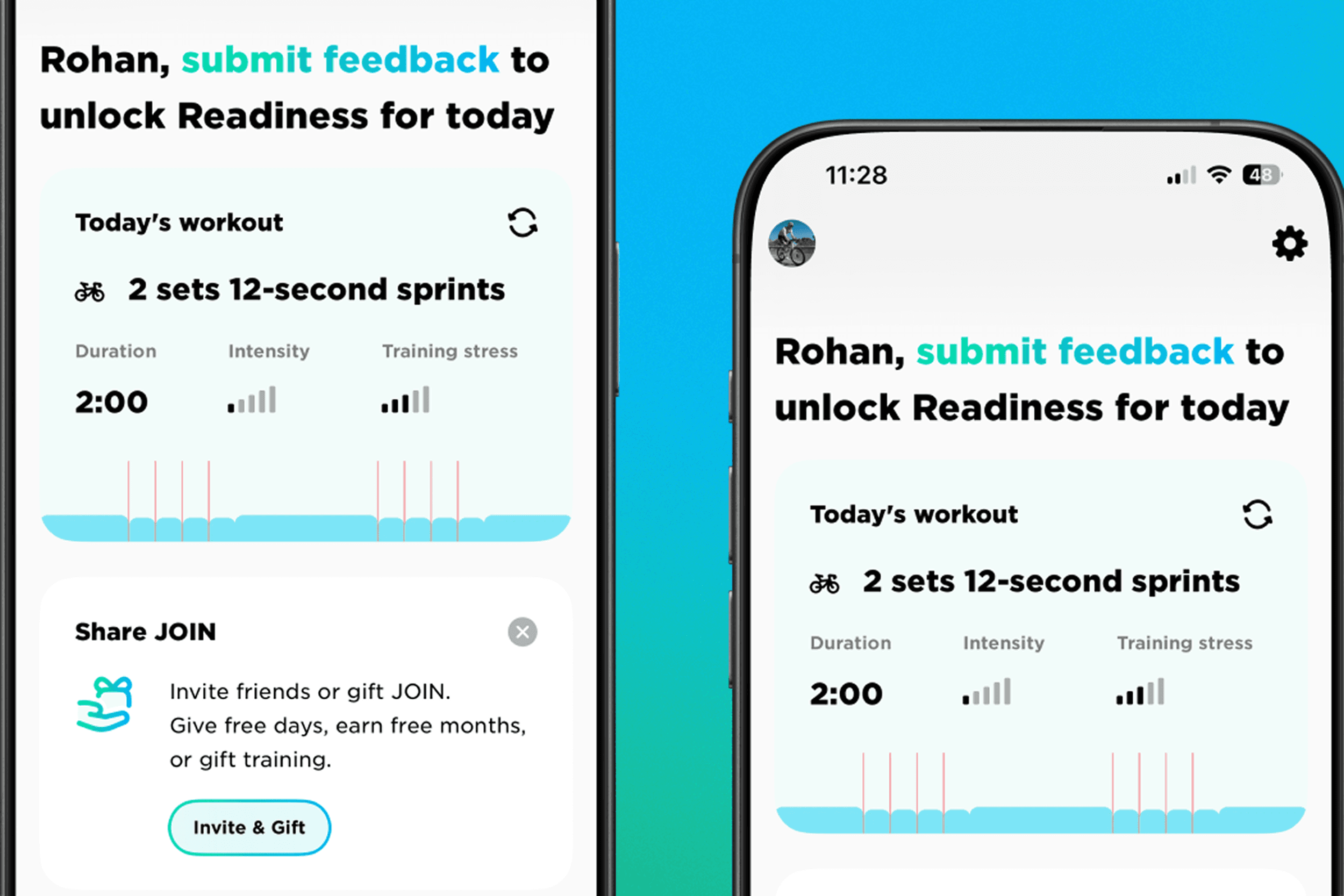
Mit dem neuen Home Screen steht die Readiness jetzt direkt ganz oben. Sobald du JOIN öffnest, kannst du vor deinem Workout kurz einchecken und deinen Muskelkater oder deine Erholung bei Bedarf direkt anpassen.
Damit dein Training präzise bleibt, solltest du dein Feedback immer zuerst ausfüllen. Wenn noch etwas fehlt, erinnert dich ein roter Punkt daran. Nach deiner Fahrt wird die Readiness zurückgesetzt und steht am nächsten Tag wieder bereit. So blebst du bei jeder Einheit im Einklang mit deinem Körper.
Readiness mit Wearables kombinieren
Wenn du ein Wearable wie Whoop, Oura, Garmin oder Fitbit nutzt, kannst du diese Daten nutzen, um deine Readiness zu unterstützen. Diese Geräte liefern wertvolle Einblicke wie Schlafqualität und Herzfrequenzvariabilität, die dir helfen, deine Erholung besser zu verstehen. Sie sollten dein eigenes Körpergefühl jedoch ergänzen und nicht ersetzen.
Wenn dein Gerät dir sagt, dass du bereit bist, sich dein Körper aber müde anfühlt – vertrau deinem Körper. Wenn beides übereinstimmt, kannst du mit vollem Vertrauen durchstarten. Das Ziel ist es nicht, Zahlen blind zu folgen, sondern Daten mit deiner eigenen Intuition zu verknüpfen.
Warum Readiness so wichtig ist
Beim Training geht es nicht nur darum, stur einem Plan zu folgen. Es geht darum, diesen Plan zur richtigen Zeit und am richtigen Tag richtig umzusetzen. Ohne diese Flexibilität läuft man leicht Gefahr, zu hart zu trainieren, wenn eigentlich Erholung angesagt wäre, oder sich zurückzuhalten, wenn man eigentlich bereit für Höchstleistungen ist. Beides bremst deinen Fortschritt. Die Readiness hilft dir, diese Fehler zu vermeiden, indem sie dein Training darauf abstimmt, wie du dich wirklich fühlst. Langfristig führt das zu besseren Einheiten, einer optimalen Erholung und konstanteren Fortschritten.
Wie du dein Körpergefühl in besseres Training verwandelst
Der wahre Wert von „Readiness“ (deiner Trainingsbereitschaft) liegt nicht nur im Wert selbst, sondern in dem, was danach passiert. Sobald du deinen Muskelkater und deine Erholung aktualisierst, passt JOIN dein Training entsprechend an. Das kann bedeuten, dass die Art, Dauer oder Intensität deiner Einheit angepasst wird, anstatt ein Workout zu erzwingen, das gerade einfach nicht passt.
Wenn du dich frisch fühlst, kannst du selbstbewusst trainieren und das Beste aus intensiven Einheiten herausholen. Wenn sich Müdigkeit einschleicht, passt sich dein Plan an, um deine Erholung zu sichern. Genau diese Balance sorgt dafür, dass du am Ball bleibst, ohne auszubrennen.
Eine intelligentere Routine aufbauen
Auf lange Sicht machen diese kleinen, täglichen Anpassungen einen riesigen Unterschied. Statt zu raten, ob du Gas geben oder dich eher zurückhalten solltest, hast du ein klares Signal, das dir die Entscheidung erleichtert. Harte Tage bleiben effektiv, lockere Tage bleiben wirklich locker und Erholung wird zu einem festen Teil des Prozesses statt zu einem Nebengedanken. Das Ergebnis: Dein Training wird konsequenter und nachhaltiger – und genau das bringt dich letztlich voran.
Mach es zu deiner Routine
Mit dem neuen Home Screen steht die Readiness jetzt direkt ganz oben. Sobald du JOIN öffnest, kannst du vor deinem Workout kurz einchecken und deinen Muskelkater oder deine Erholung bei Bedarf direkt anpassen.
Damit dein Training präzise bleibt, solltest du dein Feedback immer zuerst ausfüllen. Wenn noch etwas fehlt, erinnert dich ein roter Punkt daran. Nach deiner Fahrt wird die Readiness zurückgesetzt und steht am nächsten Tag wieder bereit. So blebst du bei jeder Einheit im Einklang mit deinem Körper.
Readiness mit Wearables kombinieren
Wenn du ein Wearable wie Whoop, Oura, Garmin oder Fitbit nutzt, kannst du diese Daten nutzen, um deine Readiness zu unterstützen. Diese Geräte liefern wertvolle Einblicke wie Schlafqualität und Herzfrequenzvariabilität, die dir helfen, deine Erholung besser zu verstehen. Sie sollten dein eigenes Körpergefühl jedoch ergänzen und nicht ersetzen.
Wenn dein Gerät dir sagt, dass du bereit bist, sich dein Körper aber müde anfühlt – vertrau deinem Körper. Wenn beides übereinstimmt, kannst du mit vollem Vertrauen durchstarten. Das Ziel ist es nicht, Zahlen blind zu folgen, sondern Daten mit deiner eigenen Intuition zu verknüpfen.
Warum Readiness so wichtig ist
Beim Training geht es nicht nur darum, stur einem Plan zu folgen. Es geht darum, diesen Plan zur richtigen Zeit und am richtigen Tag richtig umzusetzen. Ohne diese Flexibilität läuft man leicht Gefahr, zu hart zu trainieren, wenn eigentlich Erholung angesagt wäre, oder sich zurückzuhalten, wenn man eigentlich bereit für Höchstleistungen ist. Beides bremst deinen Fortschritt. Die Readiness hilft dir, diese Fehler zu vermeiden, indem sie dein Training darauf abstimmt, wie du dich wirklich fühlst. Langfristig führt das zu besseren Einheiten, einer optimalen Erholung und konstanteren Fortschritten.
Wie du dein Körpergefühl in besseres Training verwandelst
Der wahre Wert von „Readiness“ (deiner Trainingsbereitschaft) liegt nicht nur im Wert selbst, sondern in dem, was danach passiert. Sobald du deinen Muskelkater und deine Erholung aktualisierst, passt JOIN dein Training entsprechend an. Das kann bedeuten, dass die Art, Dauer oder Intensität deiner Einheit angepasst wird, anstatt ein Workout zu erzwingen, das gerade einfach nicht passt.
Wenn du dich frisch fühlst, kannst du selbstbewusst trainieren und das Beste aus intensiven Einheiten herausholen. Wenn sich Müdigkeit einschleicht, passt sich dein Plan an, um deine Erholung zu sichern. Genau diese Balance sorgt dafür, dass du am Ball bleibst, ohne auszubrennen.
Eine intelligentere Routine aufbauen
Auf lange Sicht machen diese kleinen, täglichen Anpassungen einen riesigen Unterschied. Statt zu raten, ob du Gas geben oder dich eher zurückhalten solltest, hast du ein klares Signal, das dir die Entscheidung erleichtert. Harte Tage bleiben effektiv, lockere Tage bleiben wirklich locker und Erholung wird zu einem festen Teil des Prozesses statt zu einem Nebengedanken. Das Ergebnis: Dein Training wird konsequenter und nachhaltiger – und genau das bringt dich letztlich voran.
Mach es zu deiner Routine
Mit dem neuen Home Screen steht die Readiness jetzt direkt ganz oben. Sobald du JOIN öffnest, kannst du vor deinem Workout kurz einchecken und deinen Muskelkater oder deine Erholung bei Bedarf direkt anpassen.
Damit dein Training präzise bleibt, solltest du dein Feedback immer zuerst ausfüllen. Wenn noch etwas fehlt, erinnert dich ein roter Punkt daran. Nach deiner Fahrt wird die Readiness zurückgesetzt und steht am nächsten Tag wieder bereit. So blebst du bei jeder Einheit im Einklang mit deinem Körper.
Readiness mit Wearables kombinieren
Wenn du ein Wearable wie Whoop, Oura, Garmin oder Fitbit nutzt, kannst du diese Daten nutzen, um deine Readiness zu unterstützen. Diese Geräte liefern wertvolle Einblicke wie Schlafqualität und Herzfrequenzvariabilität, die dir helfen, deine Erholung besser zu verstehen. Sie sollten dein eigenes Körpergefühl jedoch ergänzen und nicht ersetzen.
Wenn dein Gerät dir sagt, dass du bereit bist, sich dein Körper aber müde anfühlt – vertrau deinem Körper. Wenn beides übereinstimmt, kannst du mit vollem Vertrauen durchstarten. Das Ziel ist es nicht, Zahlen blind zu folgen, sondern Daten mit deiner eigenen Intuition zu verknüpfen.
Warum Readiness so wichtig ist
Beim Training geht es nicht nur darum, stur einem Plan zu folgen. Es geht darum, diesen Plan zur richtigen Zeit und am richtigen Tag richtig umzusetzen. Ohne diese Flexibilität läuft man leicht Gefahr, zu hart zu trainieren, wenn eigentlich Erholung angesagt wäre, oder sich zurückzuhalten, wenn man eigentlich bereit für Höchstleistungen ist. Beides bremst deinen Fortschritt. Die Readiness hilft dir, diese Fehler zu vermeiden, indem sie dein Training darauf abstimmt, wie du dich wirklich fühlst. Langfristig führt das zu besseren Einheiten, einer optimalen Erholung und konstanteren Fortschritten.
Noch mehr spannende Artikel für dich
Entdecke wertvolle Trainingstipps, um deine Leistung als RadfahrerIn noch weiter zu steigern.


Noch mehr spannende Artikel für dich
Entdecke wertvolle Trainingstipps, um deine Leistung als RadfahrerIn noch weiter zu steigern.
Noch mehr spannende Artikel für dich
Entdecke wertvolle Trainingstipps, um deine Leistung als RadfahrerIn noch weiter zu steigern.

Entfessle noch heute Dein volles RadfahrerInnen-Potenzial
Werde Teil von Tausenden RadfahrerInnen, die ihre Leistung mit den Trainingsplänen von JOIN bereits verbessert haben.
Entfessle noch heute Dein volles RadfahrerInnen-Potenzial
Werde Teil von Tausenden RadfahrerInnen, die ihre Leistung mit den Trainingsplänen von JOIN bereits verbessert haben.
Mit Deiner Anmeldung stimmst Du unseren Allgemeinen Geschäftsbedingungen und unserer Datenschutzerklärung zu.
Entfessle noch heute Dein volles RadfahrerInnen-Potenzial
Werde Teil von Tausenden RadfahrerInnen, die ihre Leistung mit den Trainingsplänen von JOIN bereits verbessert haben.
Mit Deiner Anmeldung stimmst Du unseren Allgemeinen Geschäftsbedingungen und unserer Datenschutzerklärung zu.